
Image credit: Public Health England
Air pollution poses a serious threat to public health in the United Kingdom and is considered the largest environmental risk in this regard. According to a 2010 assessment by the Environment Audit Committee, the financial burden of air pollution related health issues was likely to surpass previous estimates of £8 to £20 billion.
Scientific research has firmly established the link between air pollution and various health problems. Long-term exposure to polluted air - spanning years or even lifetimes - can lead to a reduction in life expectancy, primarily through the development of cardiovascular and respiratory diseases, as well as lung cancer. Even short-term exposure, over hours or days, can trigger significant health effects, including decreased lung function, worsening of asthma, and increased hospital admissions and deaths due to respiratory and cardiovascular conditions.
Pollution originates from a wide range of sources, both natural and human-made. Common everyday activities such as transportation, industrial operations, agriculture, energy production, and residential heating all contribute to the degradation of air quality.
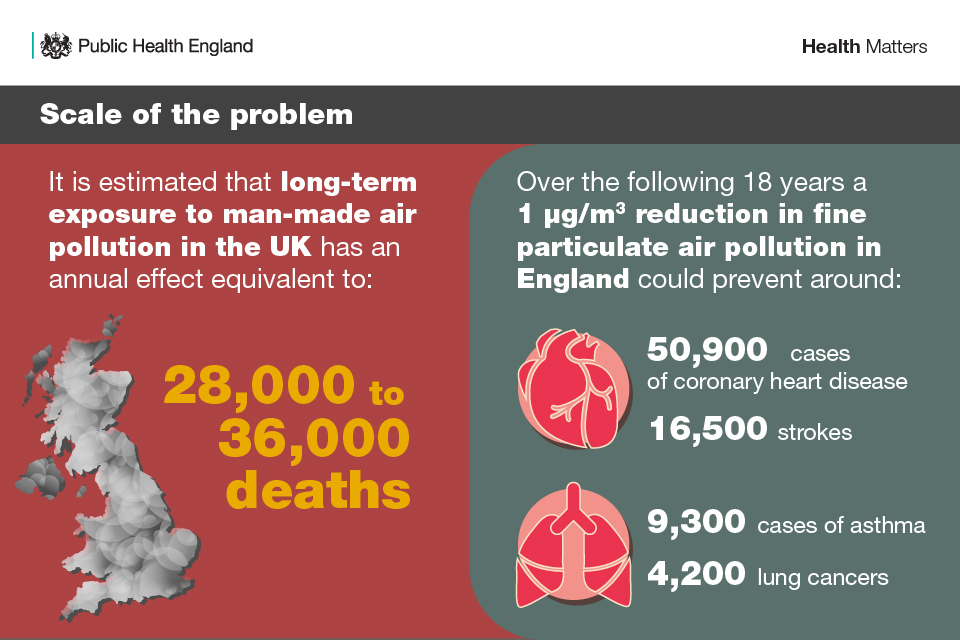
To better understand the potential health benefits of reducing pollution, the UK Health Forum and Imperial College London, with funding and support from Public Health England (PHE), developed a detailed modelling framework. Their analysis showed that lowering fine particulate pollution in England by just 1 µg/m³ could, over an 18-year period, prevent approximately 50,900 cases of coronary heart disease, 16,500 strokes, 9,300 instances of asthma, and 4,200 cases of lung cancer.
Recognising the urgency of the issue, the UK government has established legal standards and aspirational targets for various air pollutants. It has also reaffirmed its commitment to reducing harmful emissions and improving air quality. The Clean Air Strategy outlines the government's rationale for intervention and its resolve to tackle air pollution as a public health priority.